STSecret Therapy
Dark Circle Clinic · Complication Correction

When a dark circle is a complication, the cause comes first.

Ectropion, collagen-injection nodules, filler or fat-graft lumpiness, and hollowing after excessive fat removal can all be described as a dark under-eye. But each one requires a different plan.

Patterns
Ectropion · nodules · hollowing
Causes
Support · plane · over-removal
Core
Cause separation
Review
Photos and history
Principle
Avoid blind refilling

Complication patterns covered here

  • Ectropion after lower-eyelid surgery, with scleral show or dryness
  • Nodules or lumpiness after collagen injection, filler, or fat grafting
  • Hollow dark circles after too much under-eye fat was removed
  • A darker, more tired under-eye after a prior procedure
  • Mixed cases where simple filler or more fat may not be the right first answer
ST Approach

ST separates the visible complaint into lid position, support, residual injected material, true volume deficit, skin-layer color, and mixed patterns. Ectropion needs support evaluation, nodules require material-and-plane review, and over-removal hollowing requires careful layer-by-layer reconstruction planning.

Cause Map

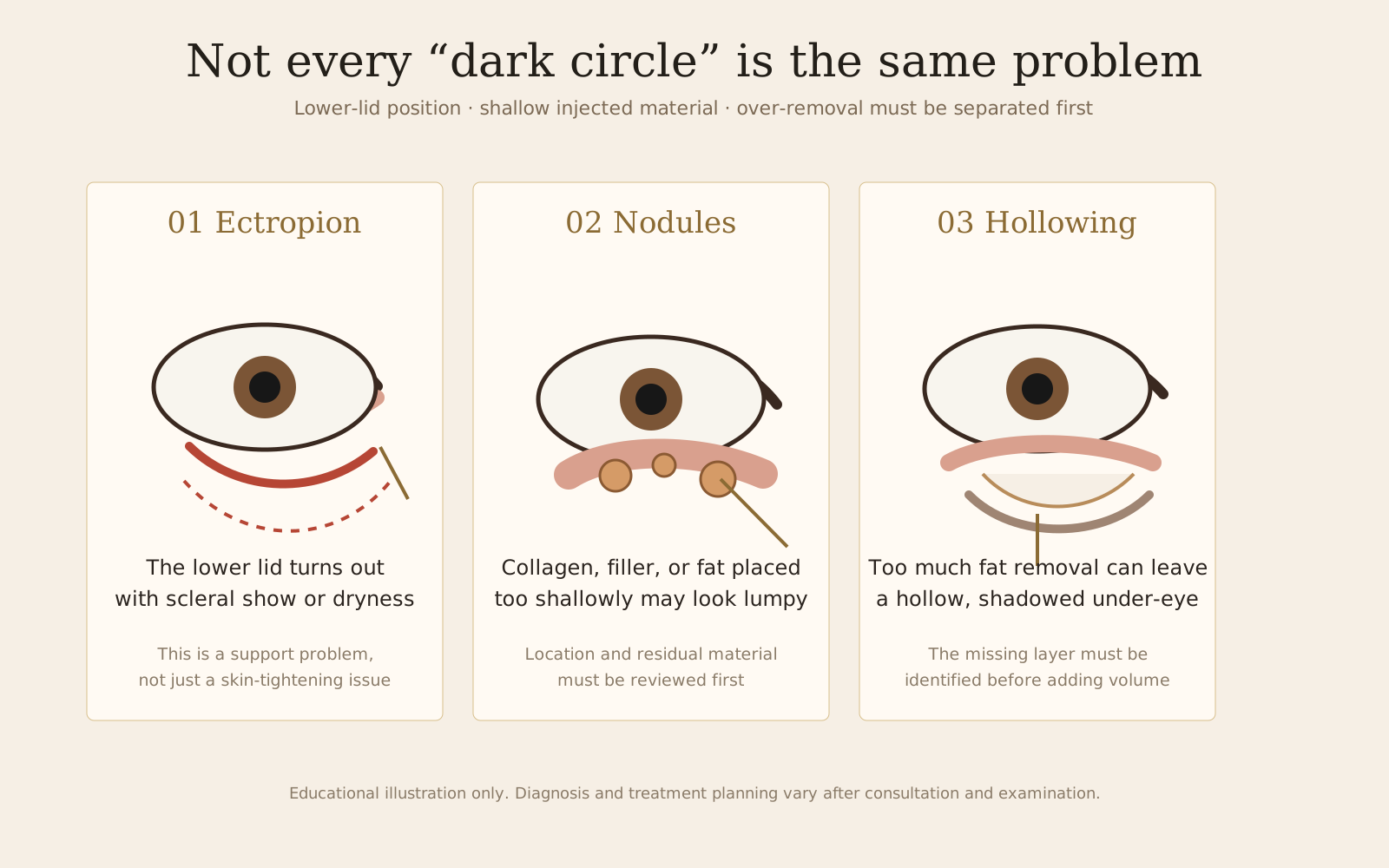
Ectropion, nodules, and hollowing are different problems.

The same “dark circle” or under-eye dissatisfaction can come from lower-lid position, shallow injected material, or over-removal of fat. The correction plan changes with the cause.

Educational diagram comparing ectropion, collagen nodules, and hollowing after excessive under-eye fat removal
Ectropion

Ectropion is not fixed by simply pulling more skin.

When the lower lid turns out or drops, patients may see more white of the eye, dryness, tearing, or a changed eye shape. The key is not additional skin removal but evaluation of lower-lid and lateral canthal support.

  • Scleral show and dryness
  • Lower-lid and corner support review
  • Canthal fixation or support reconstruction may be considered
Nodule & Surface

Collagen or filler nodules should be located before more volume is added.

Collagen, filler, or fat left too shallowly or unevenly in the thin under-eye can create nodules, puffiness, or surface irregularity. Adding more material before identifying the layer can repeat the problem.

  • Review residual shallow material
  • Separate nodules, swelling, and surface unevenness
  • Decide whether dissolution, removal, or surgical correction is relevant
Over-removal

A hollow created by fat over-removal should not be emptied again.

When too much orbital fat was removed, the under-eye can look hollow and shadowed. ST evaluates remaining orbital fat, the tear-trough ligament, and the missing volume plane before considering repositioning or fine support.

  • Hollowing after over-removal
  • Separate tear trough from mid-face hollowing
  • Add support only in the layer that needs it

Consultation and correction flow

01

Photos and history

Surgery, filler, collagen injection, fat grafting, and laser history are reviewed together with front, oblique, and side photos.

02

Cause classification

The dominant issue is separated: ectropion, nodules, hollowing, groove, pigmentation, support weakness, or a mixed pattern.

03

Correction priority

Unstable lid position or shallow injected material may need to be addressed before any new volume is added.

04

Recovery-led planning

Complication correction can heal more slowly than primary surgery, so the plan prioritizes stability over immediate dramatic change.

Reference Cases

Reference cases for revision planning

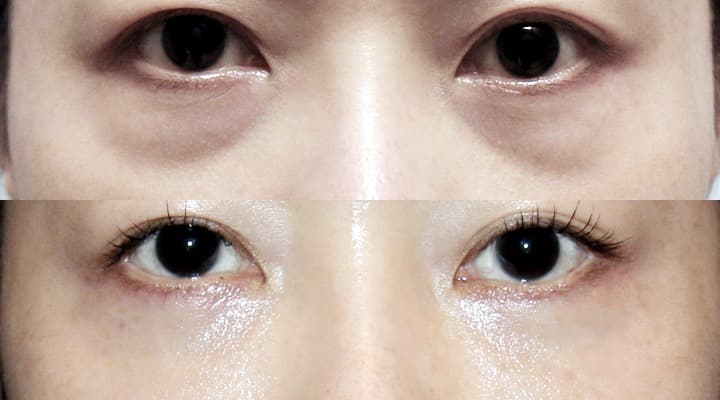
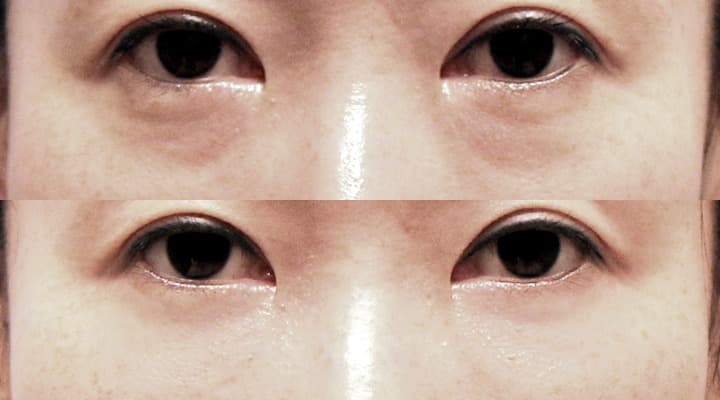
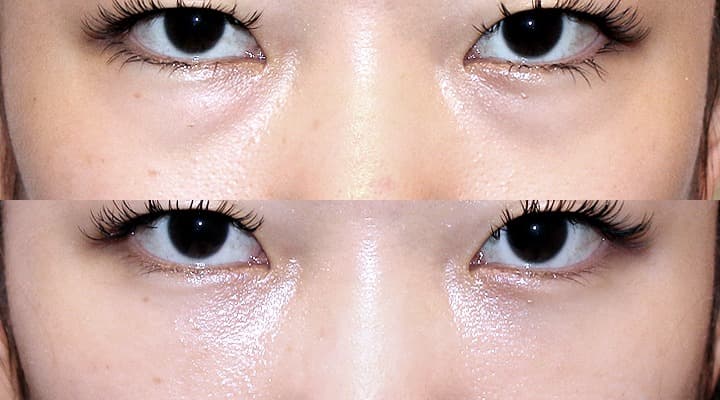
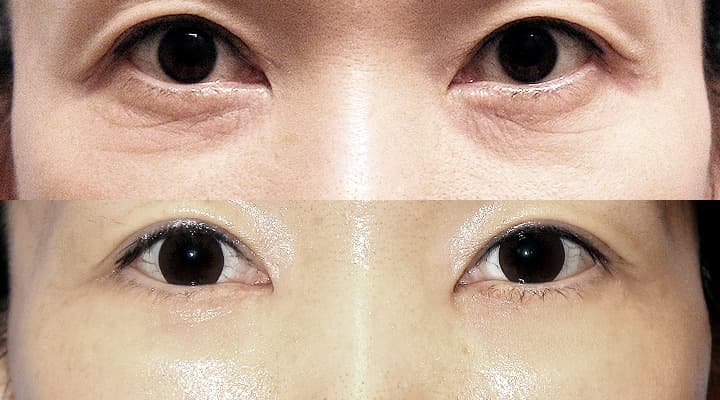
These consented before-and-after images are not displayed as a complication gallery. They are reference patterns where under-eye revision, support reinforcement, or hollow support may be considered. Actual diagnosis varies after examination.

Case 17 under-eye reference before-and-afterCase 17
Lower Eyelid Re-Revision

Re-revision after a previous lower blepharoplasty done elsewhere — the harder case a revision specialist exists for. Cause-led plan combining lower-lid revision, fat grafting, lateral canthus reinforcement and tightening laser, staged rather than repeated as one operation.

Case 18 under-eye reference before-and-afterCase 18
Lower Eyelid Re-Revision

Re-revision through the transconjunctival inner-lid route — fat repositioning, gel layering, tightening laser and supplemental cheek fat, staged to address recurrence from a prior outside surgery without re-traumatizing the lower lid.

Case 24 under-eye reference before-and-afterCase 24
TCLB + Lateral Canthus

Transconjunctival lower blepharoplasty with fat repositioning, gel and lateral canthus reinforcement — the combination chosen when the cause is corner laxity as well as under-eye fat, so both are corrected in one cause-based plan.

Case 05 under-eye reference before-and-afterCase 05
Fat Repositioning · Hollow

Hollow tear-trough pattern — the deficit corrected by transposing existing orbital fat over the rim rather than adding synthetic filler. The structural cause of the shadow is addressed at its source.

Frequently asked

It depends on severity and cause. Mild to moderate cases may be planned around lower-lid support and lateral canthal fixation, while severe cases require careful discussion of recovery and limitations.

The material, layer, and remaining amount must be assessed first. The next step may involve observation, dissolution if applicable, removal, or surgical correction depending on the case.

A true hollow from over-removal is corrected by repositioning remaining orbital fat and, when needed, deeper fine grafting — not by the shallow concealer layer, which is for see-through surface shadows. Not every hollow is solved by grafting alone; remaining orbital fat, tear-trough tethering, and mid-face support are reviewed together.

Considering revision? Start with an easy consultation.

You do not need to decide on surgery first. Send photos and prior procedure history, and ST will help you begin comfortably.

Book Consultation